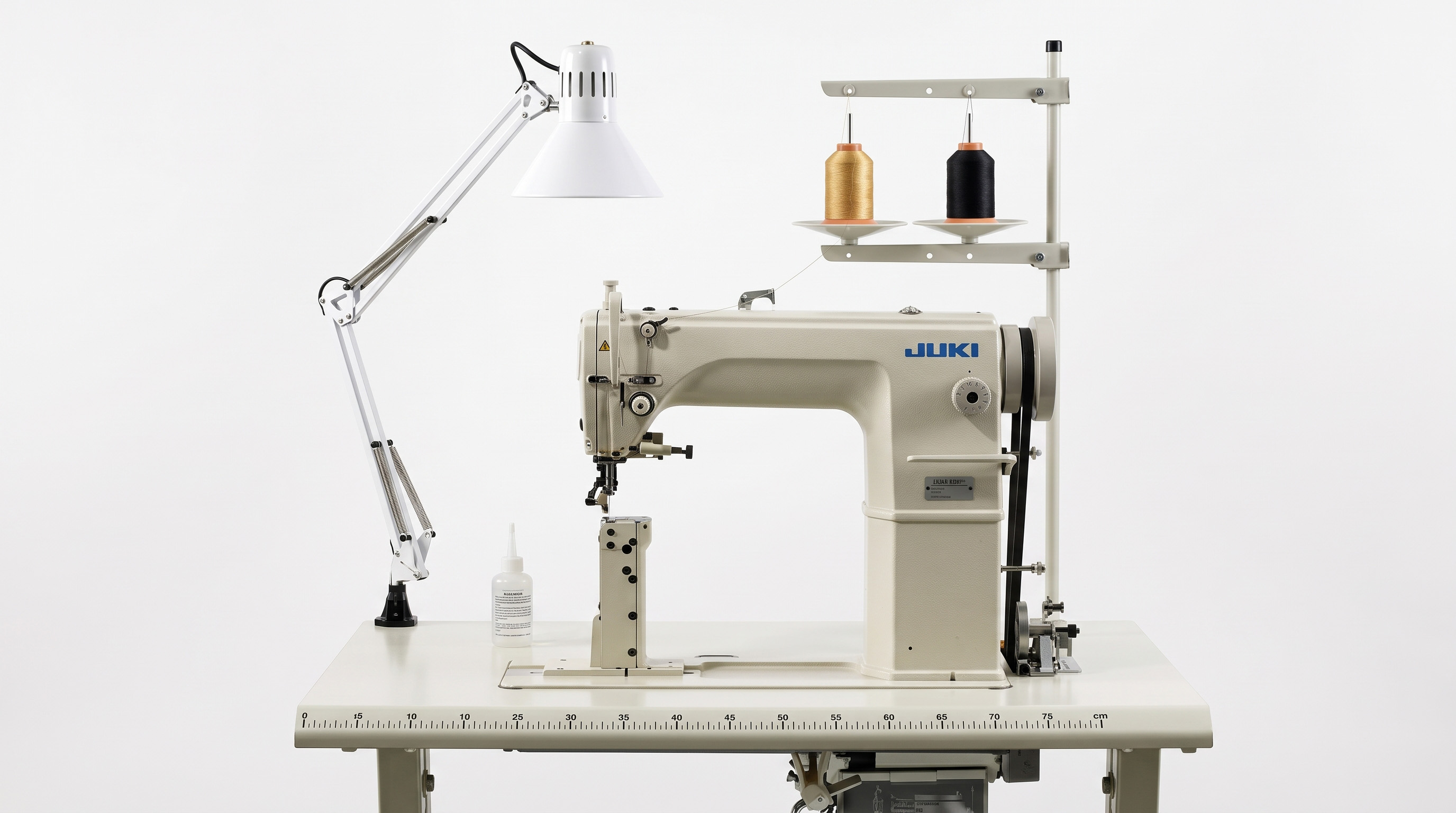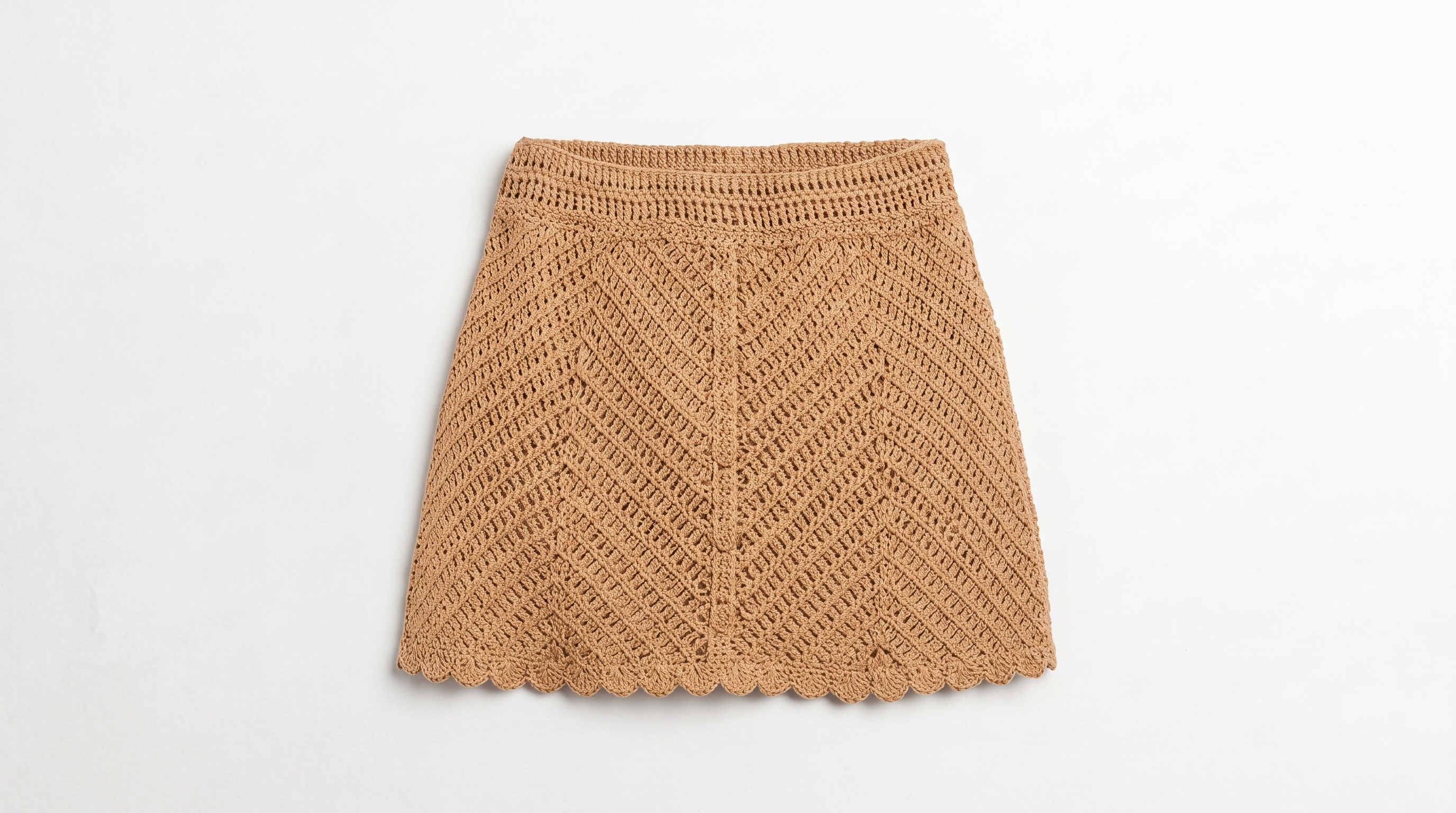
Crochet is the only garment construction still made entirely by hand. Knitting was mechanised in the sixteenth century. Crochet has not been, because the hook passes through a loop in a way no machine has been able to replicate at commercial quality.
What is sold as machine crochet is warp knitting imitating the look. It is a different fabric and anyone who has held both can tell.
So scaling crochet does not mean buying machines. It means organising people, and everything that is hard about it follows from that.
What changes between twenty and two hundred
At twenty pieces, one or two makers do the whole order. Tension is naturally consistent because it is the same hands throughout.
At two hundred, you need fifteen to thirty makers depending on the piece. Now every source of variation between two people becomes a source of variation between two garments.
Tension. The single biggest issue. Two makers working the same pattern with the same hook and the same yarn will produce pieces of different dimensions, because tension is a personal habit. A ten percent difference in gauge across a run is a garment that does not fit.
Interpretation. Written crochet patterns leave room for judgement. Where exactly a decrease sits, how an edge is finished, how a join is made. Twenty makers will make twenty small decisions.
Speed. A crocheted piece takes hours, not minutes. A detailed garment can be a full day of work or more. This sets your lead time in a way no amount of capacity fixes, because adding makers adds variation.
How consistency is actually held
Four controls, and they work together.
A gauge swatch per maker, before the run. Every maker crochets a test square. It is measured. Makers whose gauge sits outside tolerance either adjust hook size until they match or work on a different part of the order. This is the step that does the most work and it is the step most often skipped.
One yarn lot for the whole run. Yarn thickness varies between lots enough to change gauge on its own. Reserve the full quantity before starting.
A physical reference piece, not a written pattern. Every maker works next to an approved sample they can hold and count. Written patterns are for people who read patterns. A reference garment removes most of the interpretation.
Piece-level inspection, not batch-level. Machine production lets you inspect a sample of a batch, because the machine does not change its mind. Hand production needs every piece measured, because every piece has a different maker behind it. This is a real cost and it is not optional.
Where the cost sits
Crochet does not get much cheaper at volume. A machine amortises its set-up across the run. A pair of hands takes the same hours on the two hundredth piece as on the first.
What volume does buy you is scheduling: makers lined up in advance, yarn secured, and the inspection process already running. That reduces risk and lead time rather than unit cost.
The implication for pricing is straightforward. A crochet piece is priced on labour hours. If a design takes seven hours instead of four, it costs almost twice as much, and no negotiation changes that. Simplifying a stitch pattern is the lever, not the quantity.
Designing for scale
A few choices make a crochet design much easier to produce consistently.
Keep the stitch vocabulary tight. A piece using three stitch types is far more repeatable across thirty makers than one using eight.
Avoid long unbroken plain sections. Ironically, plain areas show tension differences most clearly. Texture hides small variation.
Design in panels rather than in the round where possible. Panels can be measured, sorted and matched before assembly, so two panels of slightly different gauge can be paired rather than ending up on opposite sides of one garment.
Allow a wider fit tolerance than you would on a woven piece. Crochet has drape and give. A design that depends on a precise measurement is fighting the material.
Ask about the finishing. Blocking, which is wetting and pinning a piece to its finished dimensions before drying, pulls a lot of variation out. It takes space and time and it is worth specifying.
What to expect on lead time
Longer than knit, always. The making is hours per piece and the makers are working in parallel rather than a machine running continuously.
A realistic first crochet run needs the yarn secured early, the reference sample approved before makers are booked, and a calendar that treats the making as the long pole rather than the finishing.
What you get in return is a texture that cannot be made any other way, and a customer who can see that immediately.
Tirarin is a crochet garment manufacturer producing hand crochet at scale, worked stitch by stitch to your pattern.